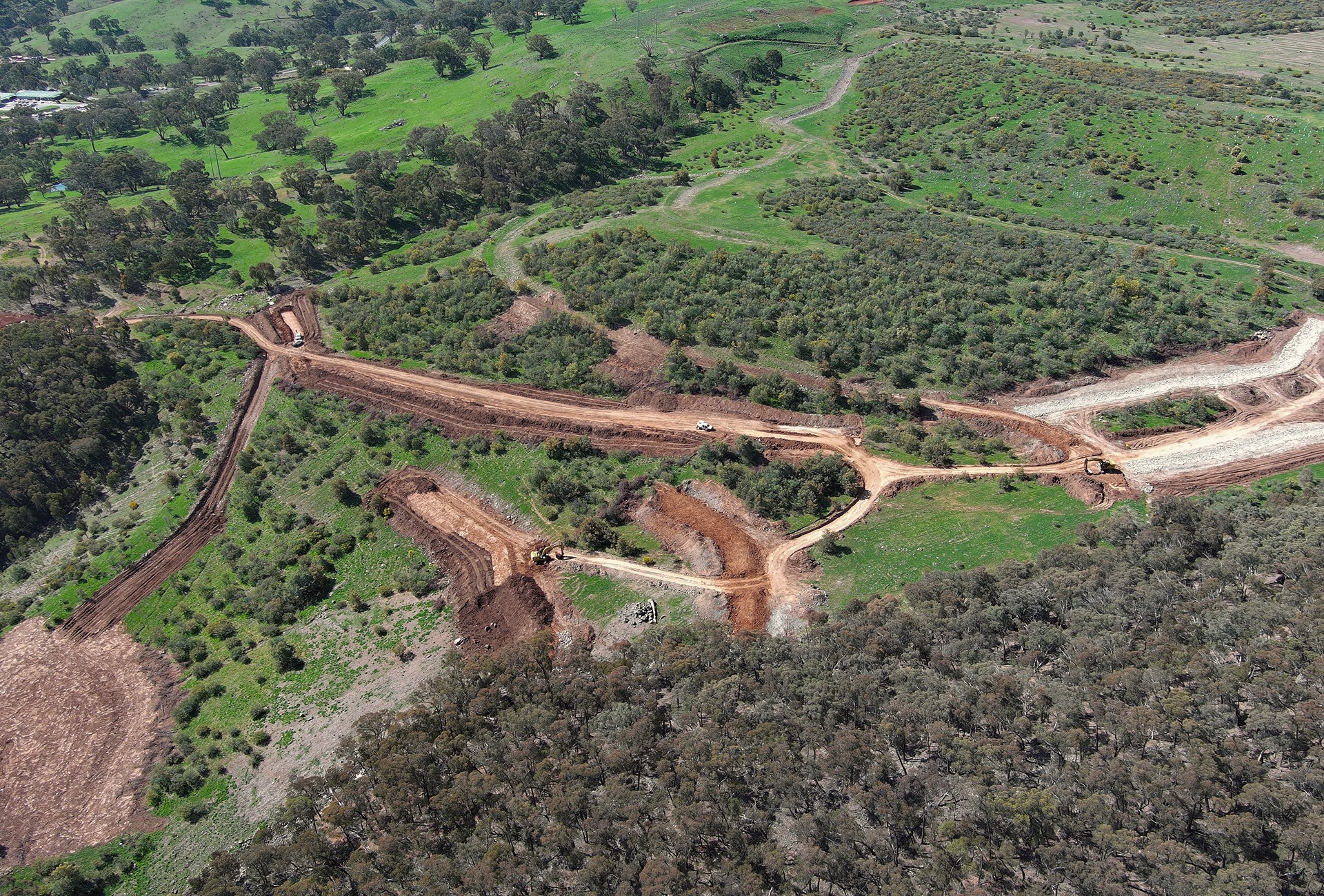
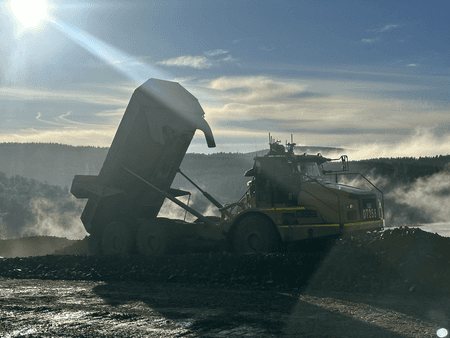
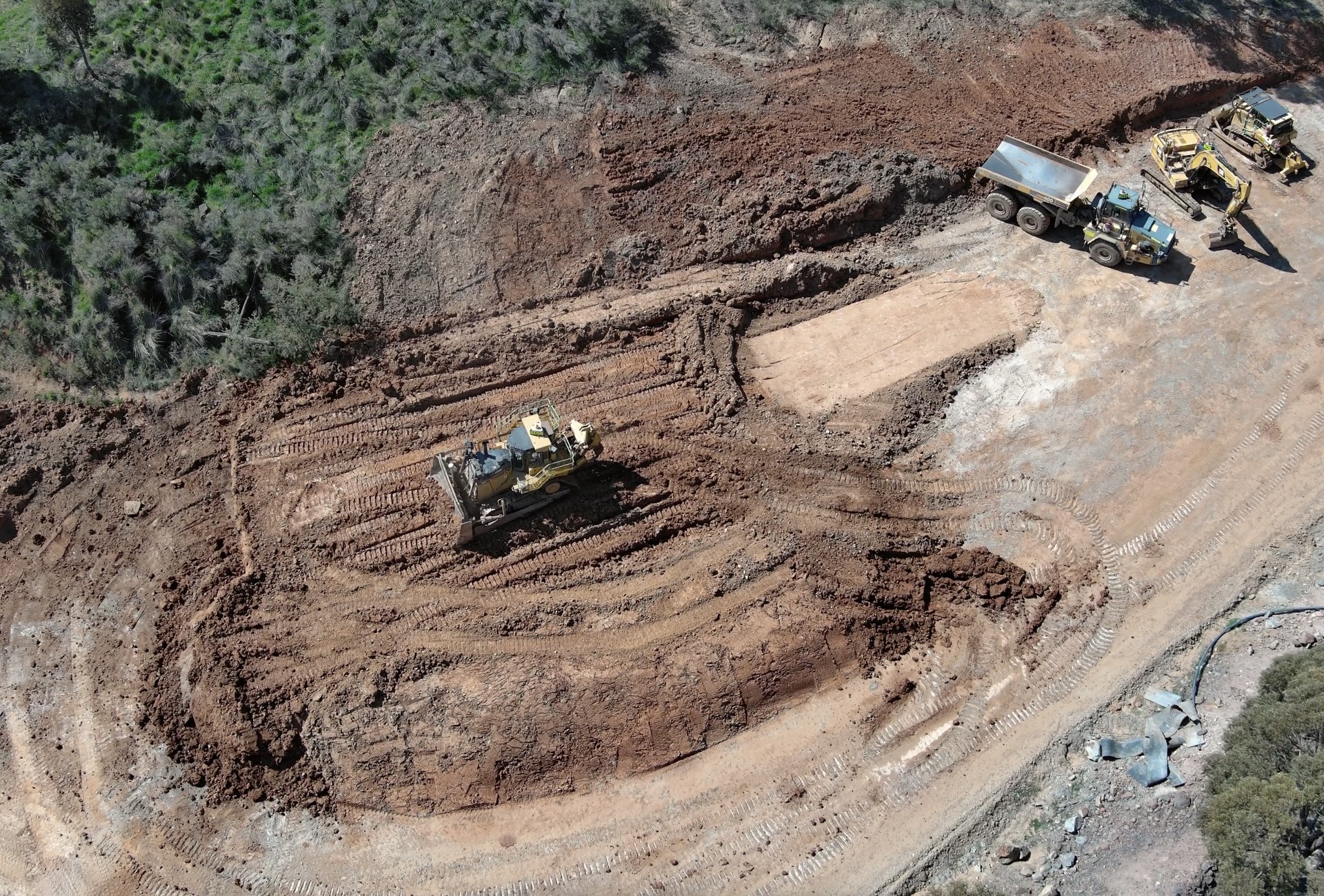
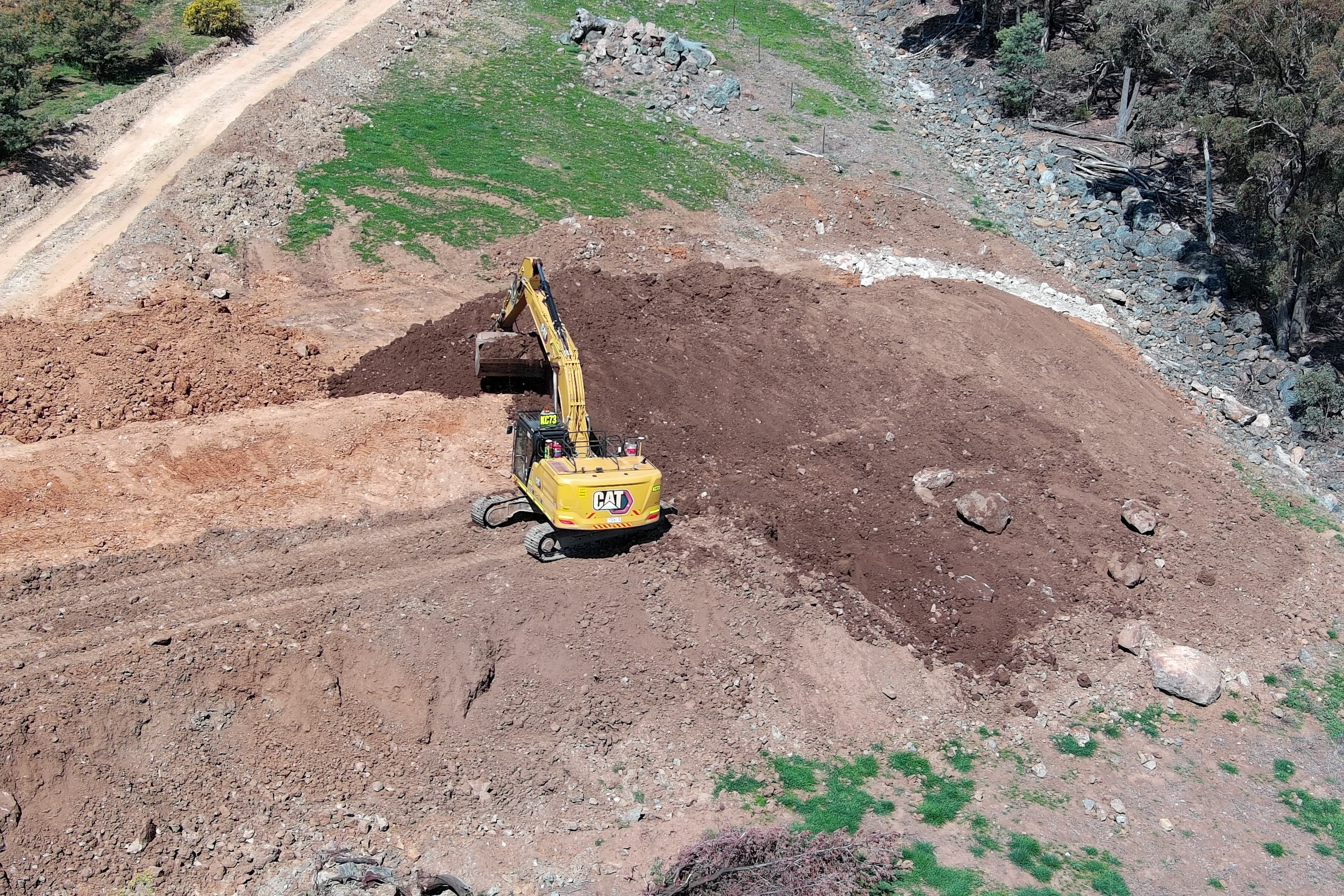
Implemented a range of civil and environmental measures to improve drainage and stability on the waste rock dump. Our task was to retrofit solutions to mitigate these issues and extend the dump’s longevity. The project was executed on challenging terrain composed of loose rock, demanding careful equipment operation and safety controls. Major components of the work included:
Surface Regrading: Reshaping of dump slopes and bench surfaces to even out irregularities and promote controlled runoff. This involved dozer pushing and grader work to achieve gentler, more uniform slope profiles that reduce erosion potential.
Construction of Drainage Channels: Excavation of long drainage swales and V-drains along benches and at the dump perimeter to capture and channel rainwater. These channels direct flow to designated discharge points rather than allowing uncontrolled sheet flow down the dump face.
Culverts & Discharge Points: Installation of culverts through access roads or berms to convey water to the outside of the dump, and creation of armored discharge points at the toe of the dump where water is released to natural drainage. Riprap (large rock) lining was placed at outlets to dissipate energy and prevent downstream erosion.
Erosion Control: Lining of critical channels with geotextile fabric and rock to stabilize them against high storm flows. In addition, we placed check dams and sediment traps in strategic locations to slow water velocity and catch sediment before it leaves the site.
Ongoing Integration: Working in tandem with the mine’s environmental team to integrate the new drainage system with existing water management infrastructure (such as ponds or pumping systems), ensuring compliance with environmental regulations for runoff water quality.
The improved drainage infrastructure now effectively controls stormwater on the waste dump, reducing erosion and maintenance needs. This proactive upgrade not only enhances environmental protection but also improves safety by stabilizing the dump surfaces.